People think they know the Costa del Sol. So did we. We’d been here before, and we came back expecting beaches, high-rises and sunburnt holidaymakers. But the more we dug into its history, the more one question kept bothering us.
“How can a place with 2,000 years of stories be known only for its beaches?”
Pasta and Panda
So this time we drove the whole coast, end to end, and stopped in ten completely different towns. Most visitors head west from Málaga. We wanted to see both sides, especially the rougher, quieter east, where there’s no railway and the mountains drop straight into the sea.
What we found was a coast built by dreamers, obsessives and visionaries.
Marbella: showing off since Roman times
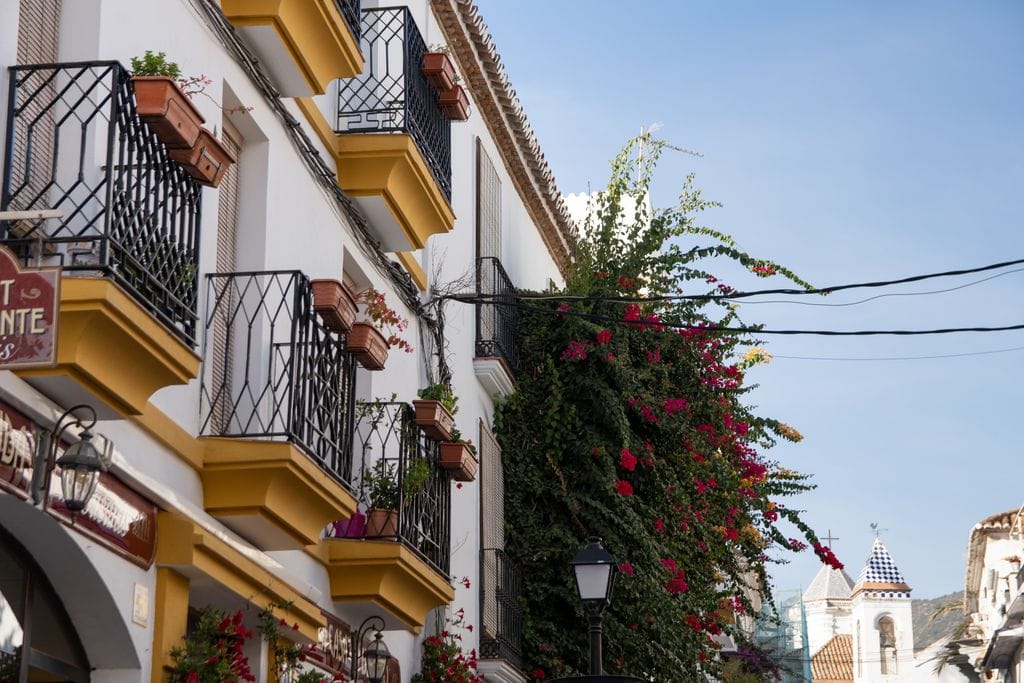
Marbella is the first name that comes to mind: glistening water, superyachts, designer boutiques, sports cars crawling through narrow streets. But its taste for luxury didn’t start with modern millionaires. At the Villa Romana de Río Verde, the mosaics skip the usual heroes and monsters and show food, kitchen utensils and even slippers. The people who lived here got rich on garum, a fermented fish sauce that was to ancient Rome what caviar or truffles are to us.
The walk from the beach to the old town tells the same story. Avenida del Mar is lined with bronze statues by Salvador Dalí, then Alameda Park slows everything down with shady trees, fountains and tiled Andalusian benches. Hidden in the old town’s maze are tiny tascas where locals actually eat: thick salmorejo topped with egg and ham, award-winning croquetas, and a clay-pot dish that has you mopping up every drop of oil with bread.
At the Mercado Municipal, a misunderstanding left us owning a fish fillet we had no way to cook. The fishmonger sent us across the street to a small restaurant that gives market ingredients a modern twist. They poached it in a herb sauce whose recipe they refused to share, and served oysters with a touch of soy that were so good we ordered them twice.
The Marbella nobody posts
Up in the hills of Nueva Andalucía, between golf courses and multi-million-euro villas, Lago de las Tortugas is an old irrigation reservoir turned green sanctuary, full of anglers, hikers and van lifers. It’s a reminder that the Costa del Sol isn’t only a coastline: the Sierra Blanca rises just a few kilometres inland.
Fuengirola: dreams that don’t cost millions
If Marbella’s dream is money and status, Fuengirola’s is fitting in and belonging. It’s a working town with a large Moroccan community, many of whom came for jobs in tourism in the 1980s and stayed. A mosque was built for them, Arabic signs are everywhere, and the market is packed with locals chasing a bargain. Everyday life comes first here, and prices stay refreshingly down to earth.
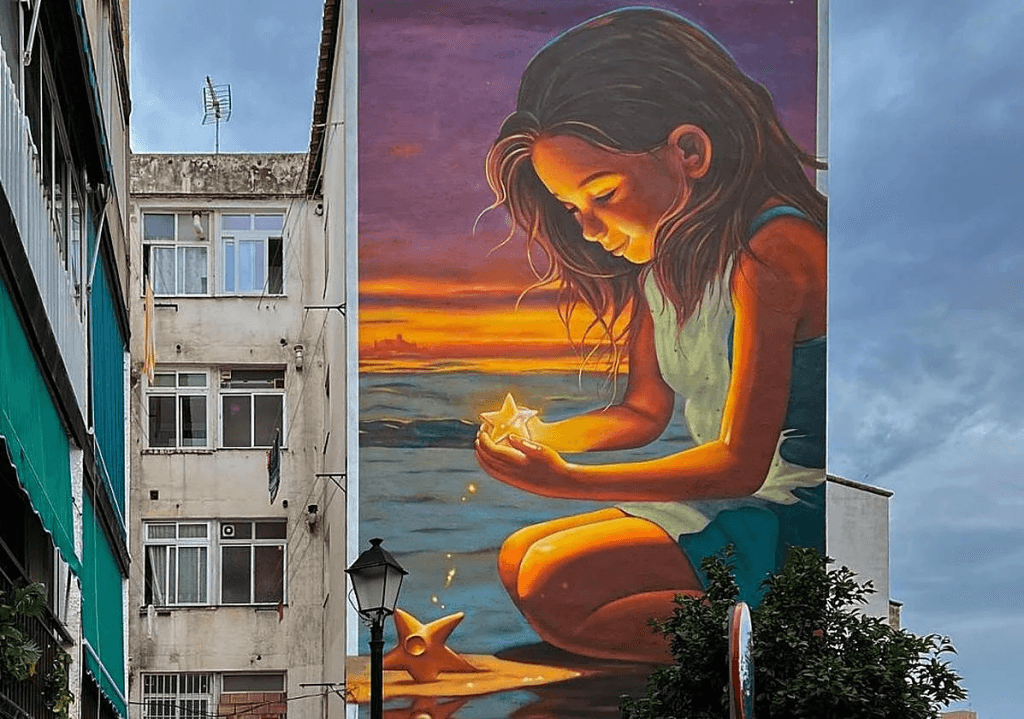
In a 1960s working-class neighbourhood, much like the one one of us grew up in, the city turned the apartment blocks into an open-air street-art museum. Our favourite mural shows an older woman handling fish, a tribute to the women behind the fishing boats that history usually leaves out.
Mijas Pueblo: the donkey question
High above the coast, the white village of Mijas is famous for its donkey taxis. It started over 60 years ago, when the first tourists tipped farmers for photos and rides, often more than a full day in the fields was worth, so the farmers switched business. Seeing the animals today, standing in the heat all day and shifting their weight from one back leg to the other, was hard.
Nearby, Donkey Dreamland takes in mistreated donkeys and gives them room to recover. Some carry the marks of a lifetime of work, and not every story there has a happy ending.
“Not every dream changed the world. Some simply reflect a lifetime of curiosity.”
Pasta and Panda
Back in the village, Professor Max’s miniature museum holds what he collected travelling the world until his death in 1975: the Last Supper painted on a grain of rice, and a real shrunken head from the Amazon. Right next to it, the Ermita de la Virgen de la Peña was carved by hand into a limestone cliff more than 500 years ago.
Benalmádena: obsession set in stone
The Stupa of Enlightenment is the largest in the Western world, 33 metres tall, with a meditation hall that still hosts free sessions twice a week. Everything about it is about letting go.
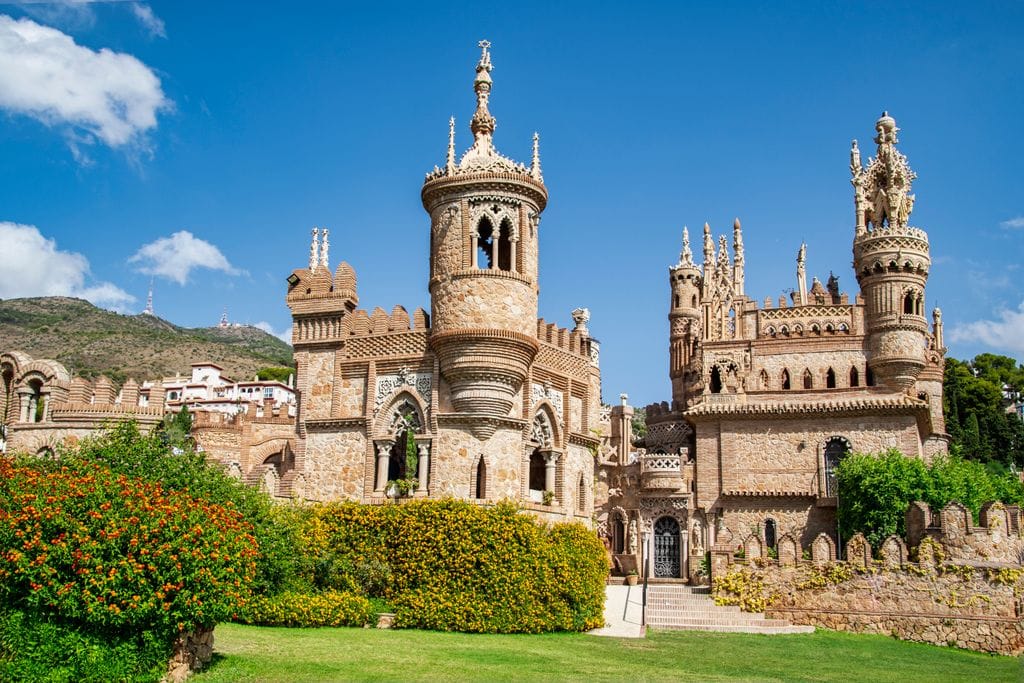
Castillo de Colomares is the opposite. A Spanish doctor living in New York felt Christopher Columbus was too closely tied to Italy, so he spent his entire fortune building a monument to Columbus’s Spanish story, with just two other workers. It mixes every style imaginable, is shaped like Columbus’s ships, and holds one of the smallest chapels in the world, where the doctor’s ashes now rest. The irony: it’s a tourist hotspot today, while Columbus himself is being rethought everywhere.
Castillo de Bil-Bil completes the pattern. A wealthy couple commissioned this neo-Islamic villa in the 1920s to settle here, then the Civil War forced them to flee, and they never got to enjoy their dream.
Torremolinos: sugar, mills and a street that wouldn’t stay quiet
Between Benalmádena and Torremolinos are whole blocks where fish and chips is easier to find than a Spanish tortilla. Some people online complain. We found one big, joyful holiday where everyone seemed to be in a good mood.
The name means “tower of mills”: abundant spring water once powered a network of flour mills that fed the region. The restored Molino de Inca now sits in a huge botanical garden, the perfect shade stop in July. Nearby, Casa de los Navajas, a sugar entrepreneur’s dream home, is built in neo-Mudéjar style, a mix of Islamic and Christian art.
Rainbow flags are everywhere, because Torremolinos is Spain’s gay capital. Even under Franco, the tiny Pasaje Begoña had an underground scene, with bars like jazz pianist Pia Beck’s. The police looked away as long as the tourists and their money kept coming, until 24 June 1971, when they sealed both ends of the street and arrested around 300 people. Today the pasaje is being restored with LGBTQ murals and has become almost a place of pilgrimage. We ended the night with rebujito, white wine with lemon soda and mint, far more drinkable than it should be in the heat.
East of Málaga: Rincón de la Victoria
Cross the invisible line at Málaga and the coast changes. In Rincón de la Victoria we arrived on a Thursday afternoon to find the whole town partying in the streets. It was the day the Virgen del Carmen, protector of fishermen, is carried to the sea while the boats gather to receive her blessing.
Then came the smell that hasn’t changed in decades: espetos. Fresh sardines are skewered on bamboo, because metal would cook them from the inside and make them fall apart, and grilled over slow-burning olive wood that doesn’t smoke out the delicate fish. Just salt and lemon. If you only eat one meal on this coast, make it this. The local boquerones victorianos are worth a stop too, with a little chickpea flour in the batter, and bigger portions for smaller prices than in Marbella.
Vélez-Málaga and Torrox: mangoes and a neighbourhood fiesta
A few kilometres further east, Vélez-Málaga’s microclimate makes it one of the only places in mainland Europe where tropical fruit grows. Even this pocket isn’t immune to climate change, and a record drought a few years ago hit the mango farms hard.
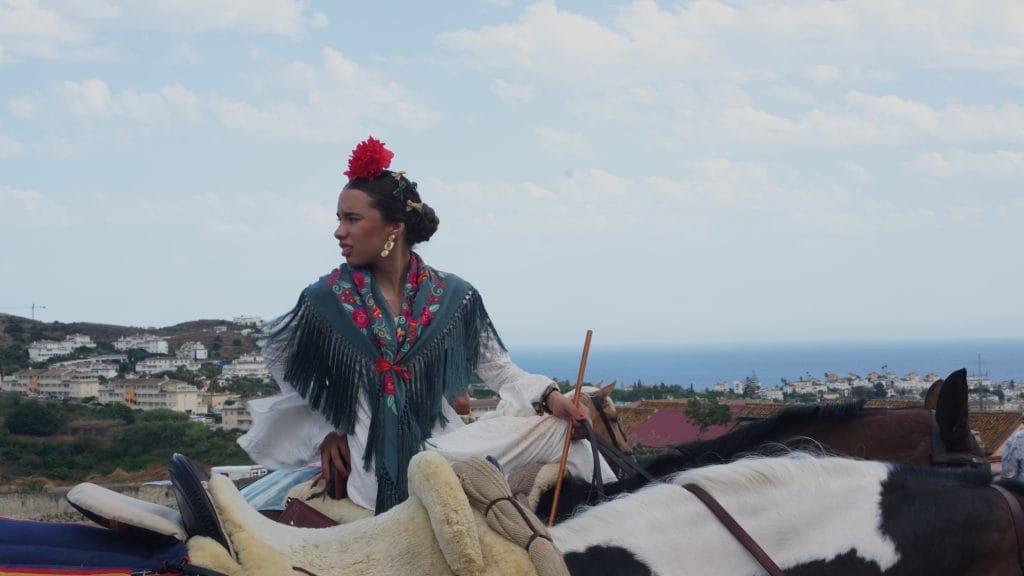
Torrox claims the best weather in Europe, but we came for a romería organised by the local women’s association. Despite the rain, the whole neighbourhood turned up: free chocolate and cake, the biggest paella we’ve ever seen handed out to a long queue (we went back for seconds), tinto de verano, and a horse race where riders snatch ribbons at a gallop while women ride side-saddle in traditional dress. It felt like travelling back in time.
Frigiliana: beautiful, with a darker past
Frigiliana is voted one of Spain’s most beautiful villages year after year, and it earns it: white walls, coloured doors, flower pots in every alley. Twelve ceramic plaques around town tell a much darker story. In 1569, around 4,000 Moriscos, Muslims who had been forced to convert to Christianity, rebelled against Catholic oppression and faced some 5,000 royal soldiers here. Thousands died, the survivors were expelled, and a flourishing Morisco culture came to an end.
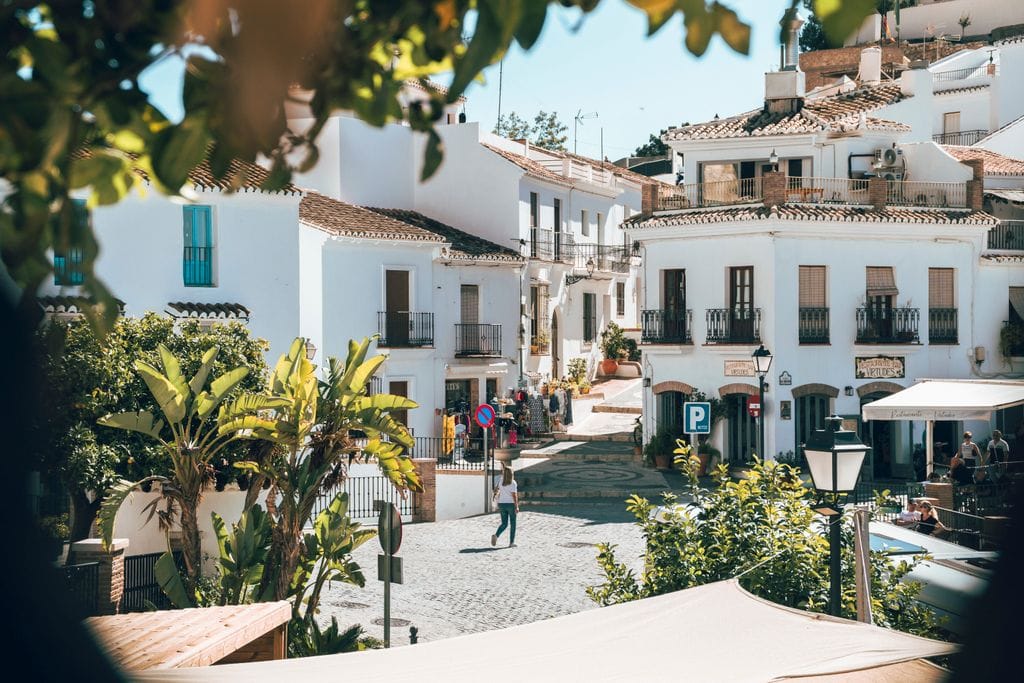
You can still see that past in the doors, many with knockers shaped like the Hand of Fatima, and at the Fountain of the Three Cultures, tucked in a back alley, which honours the Jewish, Christian and Muslim heritage that shaped the town.
Nerja: the cathedral underground
We had low expectations for Nerja, and the Balcón de Europa blew them away. Strict building rules keep the town flowing from mountain to sea without a tower block in sight. Its name comes from Narixa, from its prosperous days under Islamic rule. After the Reconquista its exposed position made it an easy target, and it was destroyed during the Napoleonic Wars by the British, who today make up a big share of its residents.
Its greatest wonder is underground. In January 1959, five kids followed a group of bats into a gap in the rock, then burst into their school shouting that they’d found bones. They had found the Cave of Nerja, a prehistoric cavern so vast it hosts concerts, with a giant central column that reminded us of the mother tree in Avatar.
Beyond the sand
Long before the roads we drove or the towns we explored, this coast was already home to generations of people, each leaving something behind. A simple question led us somewhere far more human than we expected. That’s the best part of travel: it makes you question what you think you know. This was only the first chapter of our journey through Andalucía.